
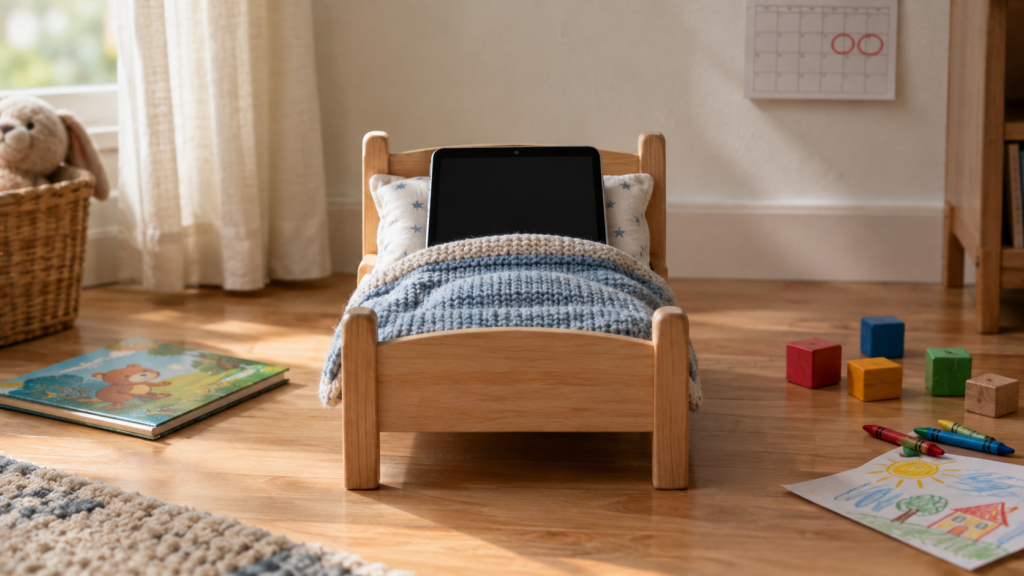
Screen time rules for kids were not something I planned to write about. I am not a perfect parent, and I am not a doctor. But one month changed the way our family uses screens, and I want to share what happened.
I have two daughters, 9 and 4. My older daughter got her own phone at 5, and my younger one at 4. The younger one had a tablet almost since she was one. We moved a lot and traveled a lot, and on long trips a gadget was the only thing that kept everyone calm.
Then came one flu season.
The Month That Changed Our Rules
For almost a month, both girls were sick and stayed at home. My husband and I both work remotely. We were literally torn between work and kids, especially during online meetings. The tablets kept the children busy and safe while we worked. I am honest about it: without them, the kids could have gotten into much worse trouble.
But after one month of almost unlimited screens, I saw changes I did not like.
My older daughter could not focus. She could not do her homework on her own, and her grades went down.
My younger daughter started to speak in very short phrases. She could not put a thought into a full sentence. She had trouble falling asleep, cried often and had tantrums.
I can’t prove that screens caused all of this. But the timing was clear to me and my husband. So we made rules.
Screen Time Recommendations by Age
Before I tell you our rules, here is what pediatricians suggest. These are the screen time recommendations by age from the American Academy of Pediatrics (AAP) and the World Health Organization (WHO).
Under 2 years
The AAP says to avoid screens before 18 months, except video calls with family. From 18 to 24 months, if you use screens, choose high-quality programs and watch them together with your child. The WHO says no screen time at all for babies under 1.
Ages 2 to 5
No more than 1 hour a day of high-quality content, ideally watched with a parent. The WHO gives the same limit for kids aged 2 to 4: no more than 1 hour, and less is better.
Ages 6 to 12
There is no single number. The AAP suggests consistent daily limits and making sure screens don’t replace sleep, physical activity, homework and family time.
Teens
Same idea: clear limits, no phones in the bedroom at night, and an open conversation about what they watch and who they talk to online.
Real life looks very different. The 2025 Common Sense Media census found that American kids aged 0 to 8 spend about 2.5 hours a day on screens. 40% of children have their own tablet by age 2, and gaming time grew 65% in four years.
Is Screen Time Bad for Kids? What Research Shows
Screens are not evil. Video calls with grandparents, educational apps and a good movie together are part of normal life. The problem is how much, and what screens push out of the day.
A large study published in JAMA Pediatrics in 2023 followed more than 7,000 children in Japan. Kids who had more screen time at age 1 had a higher risk of delays in communication and problem solving at ages 2 and 4. The researchers say this shows a link, not proof of cause. Still, it matched what I saw at home with my younger daughter’s speech.
Sleep is another big one. Screens before bed make it harder for kids to calm down and fall asleep, and tired kids have more tantrums. In our house, this connection was easy to see.
I also see the effect on myself. I work on a laptop all day, and I have noticed how screens change the way technology quietly shapes our thinking. Kids are even more sensitive to it.
Our Screen Time Rules at Home
Here are the rules my husband and I made:
- No gadgets for fun on weekdays. Monday to Friday, no games and no videos.
- Learning is allowed. My older daughter can use a device for school, but only next to me.
- Weekends: 3 to 4 hours for the whole day. Our kids’ friends from school and kindergarten play games like Roblox, and on rainy days they play and chat together online. I think that is part of their social life now.
- Good weather means no screens. When the sun is out, we go for walks, drive to the forest or go to a café. Most of these days, the kids don’t even remember the tablet.
- Evenings are family time. We play, walk and talk about everything.
And the surprising part: we have no fights about screens. The rules are clear, so the kids don’t ask for tablets from Monday to Friday. They know the weekend is coming.
How to Make Screen Time Rules Stick
You can’t just take the tablet away and expect magic. My kids had forgotten how to play on their own. At first, they did not know what to do without a screen.
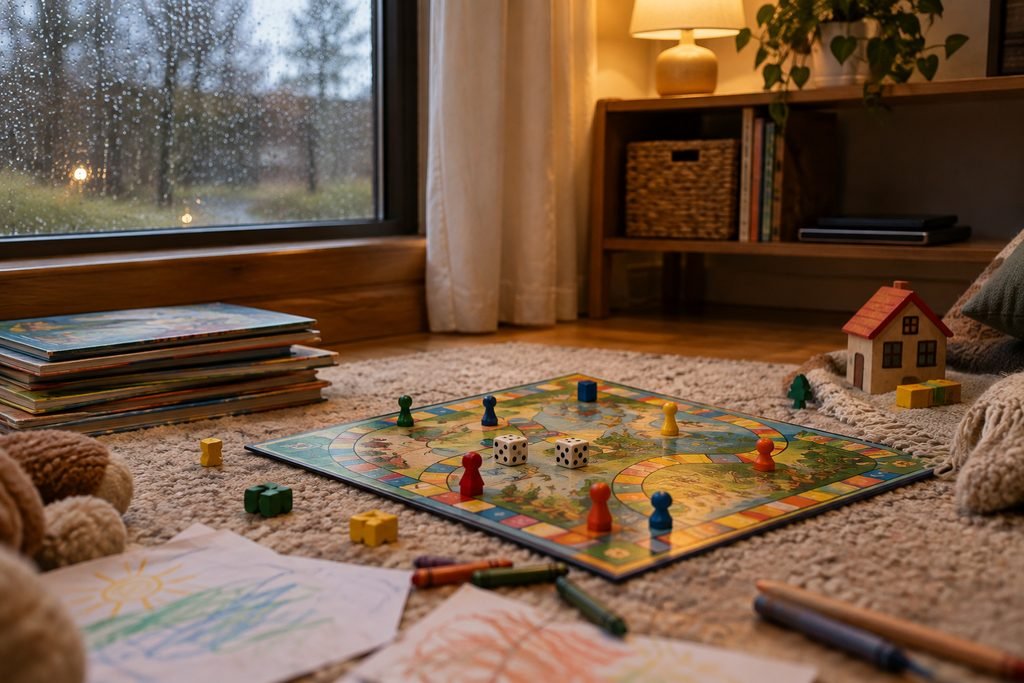
So the first step was not a rule. It was an alternative. I wrote a full step-by-step guide on how to reduce screen time for kids without daily fights.
We looked for simple board games. We invented our own games. We played with toys together, again and again. Slowly, the girls started to play on their own. To be honest, I had to teach my children how to play in real life.
Here is what helped us most:
- Give something instead. Board games, books, drawing, building blocks, a walk.
- Make rules clear and simple. “No games on weekdays” is easier than “only 37 minutes after homework.”
- Be consistent. If the rule changes every day, kids will fight every day.
- Set screen-free places. No phones at the table and no tablets in the bedroom at night.
- Watch your own screen time. Kids copy what we do, not what we say.
- Plan for real life. Sick days and long trips happen. A screen during a flight is not a failure.
- Explain the “why.” My older daughter understands that her brain needs rest, just like her body.
A Simple Family Media Plan
You can write your own plan in five minutes:
- When: which days and hours screens are allowed
- How long: a daily or weekend limit by age
- Where: screen-free rooms and places
- What: apps, games and shows that are OK
- What instead: a list of offline activities your kids enjoy
The AAP also has a free online tool called the Family Media Plan that helps you build one step by step.
What Changed After One Month of Rules
The results surprised me.
My older daughter’s grades went up, and she can focus on homework again. My younger daughter now speaks beautifully. In fact, she never stops talking! Her sleep is better and the tantrums are rare.
But the biggest change was in our family. My husband and I talk more. We feel closer to our kids. And even my work goes better: problems feel easier to solve when my head is not full of screens.

Screen time rules for kids are not about saying “no.” They are about making room for the things screens push out.
What screen time rules work in your family? Share them in the comments. I would love to learn from you.
Sources
- Live Science: New AAP screen time guidelines for kids by age
- WHO guidance: no screen time for babies, only 1 hour for kids under 5 (via ABC 33/40)
- Common Sense Media: The 2025 Common Sense Census, Media Use by Kids Zero to Eight
- Scimex: Screen time at age 1 linked with communication and problem solving issues later (JAMA Pediatrics, 2023)
- HealthyChildren.org (AAP): Family Media Plan